

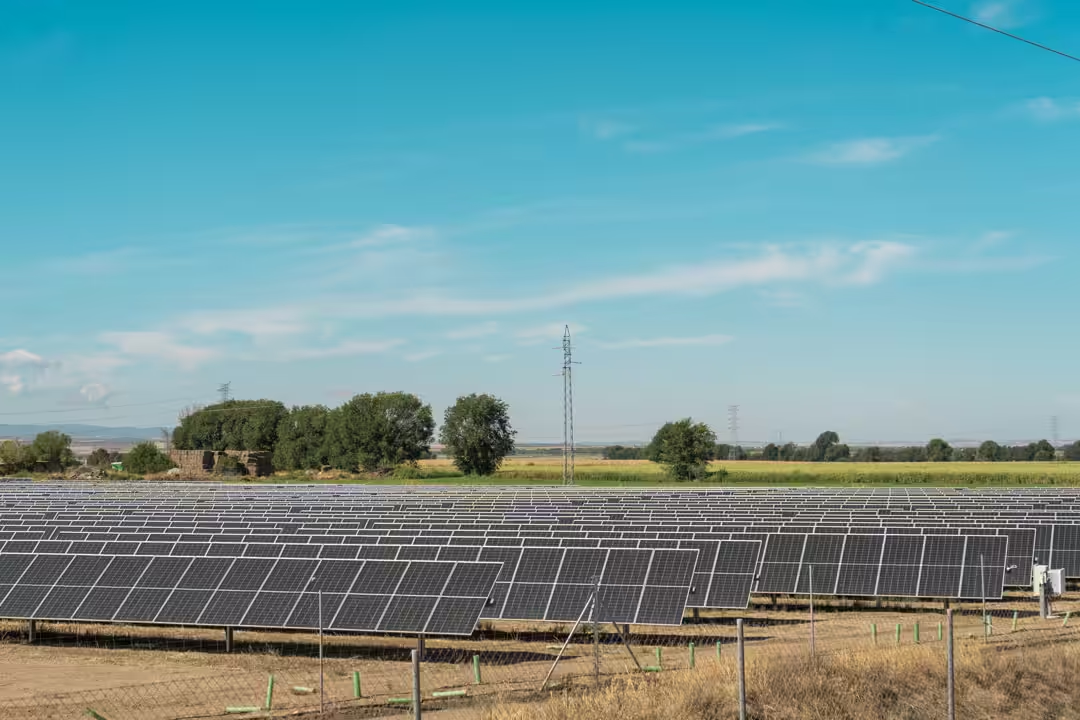
Regantes Príncipe de España: seven zero-export self-consumption photovoltaic plants, built by Eiffage Energía Sistemas, now feeding clean energy straight to the boreholes and irrigation pumps.
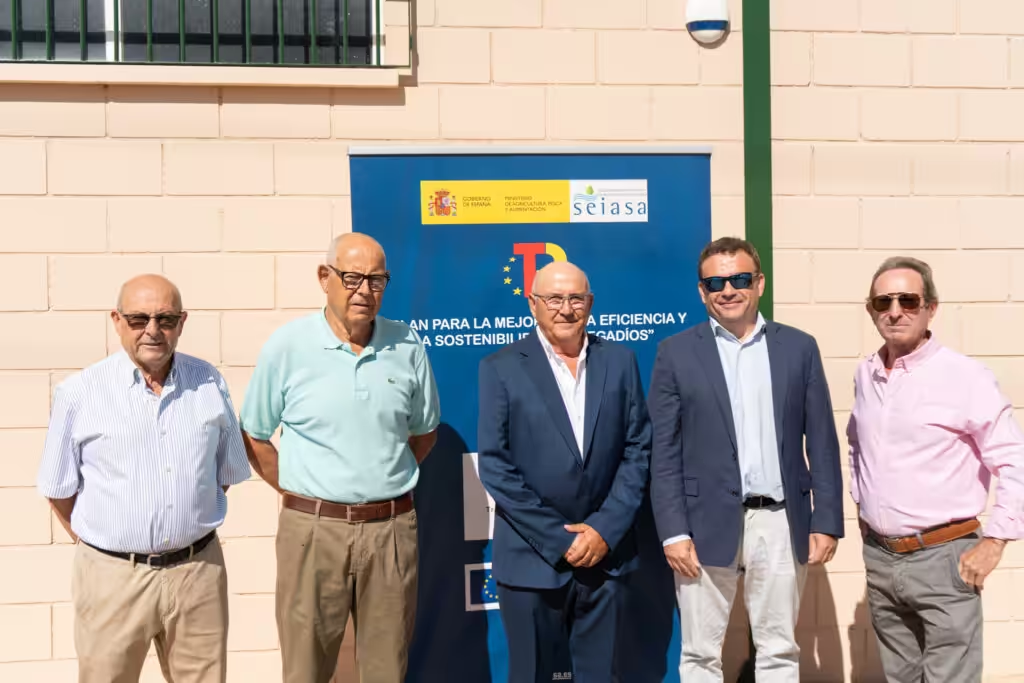
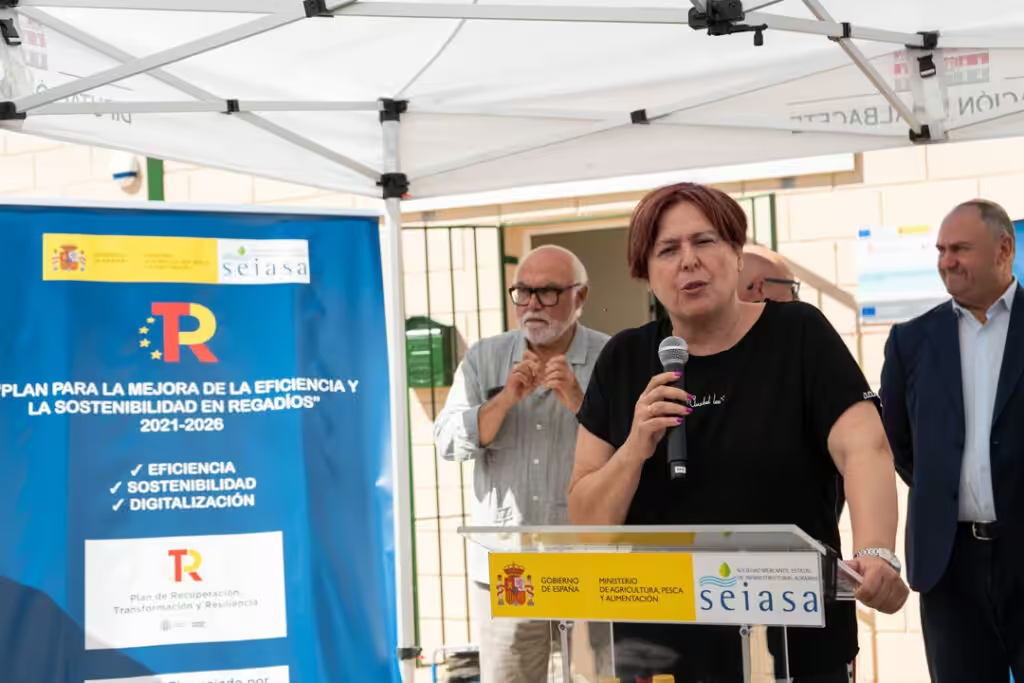
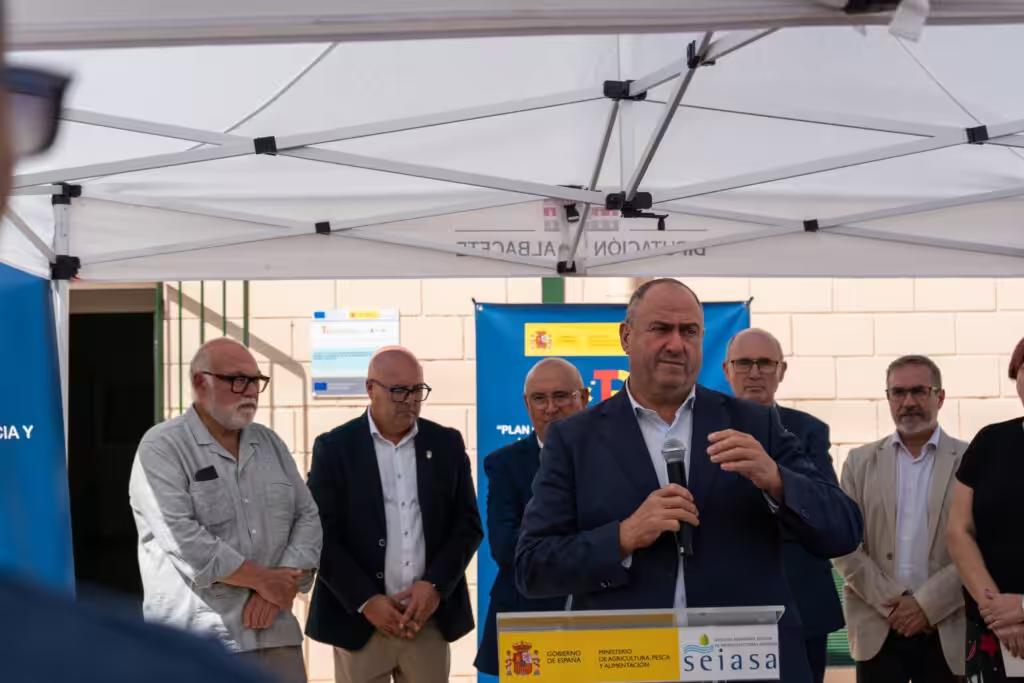
The Secretary of State for Agriculture and Food, Begoña García Bernal, accompanied by the president of Seiasa, Francisco Rodríguez Mulero, and the Regional Minister for Agriculture, Livestock and Rural Development of Castilla-La Mancha, Julián Martínez Lizán, handed each irrigation community its new installations. Attending on behalf of Eiffage Energía Sistemas was José Ignacio Rodríguez, our Solar and Wind Construction Director.
Based in Aguas Nuevas, the Príncipe de España Irrigation Community brings together some 500 member farmers and more than 3,000 hectares of crops. At the ceremony, Rodríguez Mulero confirmed this as the largest photovoltaic irrigation project delivered to date by Seiasa in Spain.
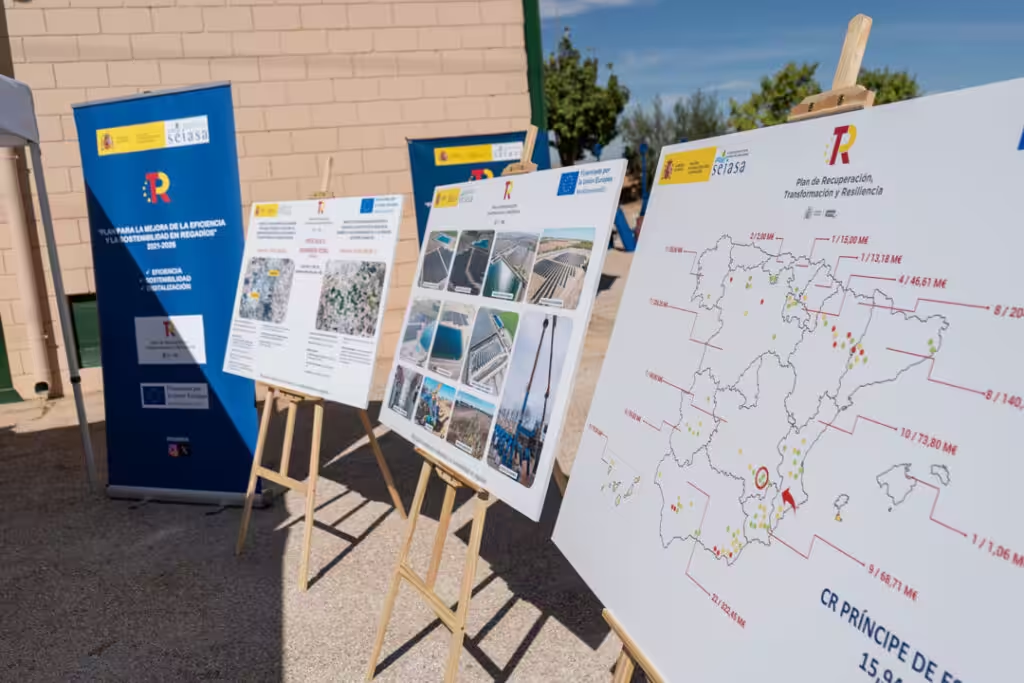
Eighty per cent of the project was subsidised with European Union funds linked to the Recovery, Transformation and Resilience Plan.
All the energy stays on the farm
The plants run in zero-export self-consumption mode. The clean energy they generate is used on site to pump water from the wells and lift it up to the irrigation reservoirs.
Seiasa puts combined output at 26.7 GWh a year and avoided emissions at 1,972 tonnes of CO₂ annually. Renewable generation also cuts the irrigation community’s exposure to electricity price volatility.
Capacity is not concentrated in a single spot. It is spread across seven plants of different sizes, laid out to suit the location of the wells and reservoirs.
Altogether, we installed 23,900 monocrystalline photovoltaic modules rated at 540 Wp, mounted on horizontal single-axis trackers aligned north-south, with 110 kVA multi-string inverters.
An EPC project worth more than €10 million
Eiffage Energía Sistemas delivered the project under an EPC contract worth more than €10 million, with an 18-month construction schedule.
Our scope covered supplying and installing the modules, tracking structures, inverters, DC/AC cabling and auxiliary systems, as well as sizing and connecting the installations.
To make the pumping equipment more energy efficient, we also replaced two motor-pump sets: pump no. 3 at SAT El Pasico, in La Vereda, and pump no. 2 at SAT Madriguera, in Fuente El Charco.
Combining solar generation with new pumping equipment has delivered electricity savings of 80 per cent.
Technology that boosts output and protects the installation
The installations are equipped with advanced monitoring and protection systems.
We installed closed-circuit television (CCTV) systems that cover every plot in full and eliminate blind spots.
The solar trackers, meanwhile, are governed by an automatic wind protection system. Anemometers and weather sensors linked to the SCADA system detect strong gusts and command the trackers to change their tilt. That reduces the area exposed to the wind and the aerodynamic drag, protecting the structures.
Building without stopping irrigation
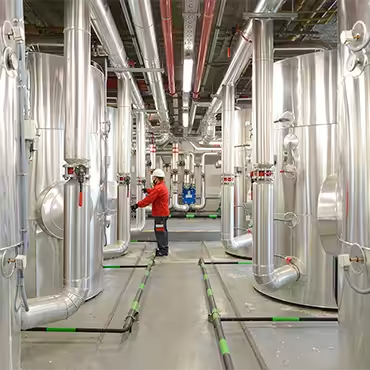
One of our biggest challenges was working on live hydraulic infrastructure, with pressurised water pipes running around the reservoirs, along with pits, access chambers and service trenches.
By planning and coordinating the works closely, we kept the irrigation system running throughout construction.
The Renewable Energy and Central Region Networks departments of Eiffage Energía Sistemas carried out the works together, strengthening collaboration between specialist teams on highly complex energy projects.


Media coverage
Ministerio de Agricultura, Pesca y Alimentación